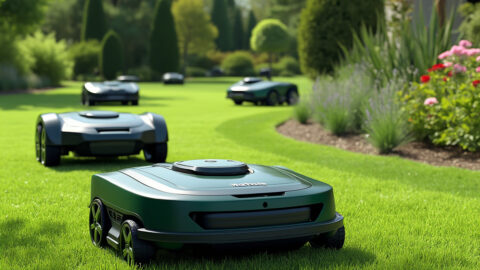
The technologies that are transforming our everyday lives don't stop at the garden fence. Robotic lawnmowers have become an indispensable tool for many homeowners who value a perfectly manicured lawn without having to spend hours mowing it themselves. But what makes these devices so popular, and what are the differences between the various models?
A typical feature of robotic lawnmowers is their autonomous operation. The mowers are equipped with sensors that help them avoid obstacles and mow the lawn efficiently. Many models use advanced route planning algorithms to ensure that no blade of grass is left uncut. These sensors are so sensitive that they can even detect changes in the weather and pause their work in rainy weather to avoid damaging the lawn.
A very important criterion when choosing a robotic lawnmower is the cutting width and cutting height. Smaller models often have a cutting width of around 17 centimeters, making them ideal for small and irregularly shaped gardens. Larger models, on the other hand, can mow widths of over 30 centimeters and are designed for expansive lawns.
Battery life varies considerably depending on the model. Basic models offer runtimes of around 60 minutes, while high-end devices can mow for up to four hours without needing to be recharged. The charging process itself is usually fully automatic: the mower returns to the charging station when the battery level is low. Experts recommend choosing models with lithium-ion batteries, as these are more durable and environmentally friendly.
Robotic lawnmowers aren't just for tech enthusiasts: design-conscious garden owners also get their money's worth. Many mowers are elegantly and compactly designed, allowing them to blend harmoniously into the garden setting. One well-known manufacturer even enlisted the help of a renowned industrial designer to create its models – a testament to the high standards of aesthetics that have now been set.
Of course, there are also disadvantages to using robotic lawnmowers. A frequently cited criticism is the need for regular maintenance. The blades often need to be cleaned and, if necessary, sharpened or replaced. The navigation system can also be affected by malfunctions, especially when environmental conditions change or the lawn has uneven terrain.
Most robotic lawnmowers range in price from €500 to €2,000, although luxury models can be significantly more expensive. Consumers suggest considering not only the price but also the associated warranty terms when making a purchase. Manufacturers typically offer a two-year warranty, and some premium brands even provide extended warranties of up to five years, which is particularly reassuring given the investment.
The environmental impact of robotic lawnmowers is also interesting. Since these devices are battery-powered, they emit no exhaust fumes, a clear advantage over gasoline-powered lawnmowers. Some environmentalists even praise the benefits of regular robotic mowing, as it can contribute to promoting biodiversity – a perfectly manicured, yet healthy lawn provides habitat for many small insects.
Historically, the development of robotic lawnmowers is a prime example of technological progress in everyday life. As early as the 1960s, futuristic visions envisioned autonomous lawnmowers, but these visions only became real with advancements in sensor and battery technology. Today, we see models connected to smart grids and controllable via smartphone app, further enhancing user-friendliness.
In conclusion, robotic lawnmowers represent an impressive solution for anyone who wants a well-maintained lawn with minimal effort. While the initial investment may be considerable, the advantages – from saving time to being environmentally friendly – are undeniable. However, those considering purchasing one should not only factor in the price, but also the specific requirements of their garden and the corresponding technical features of the models.