

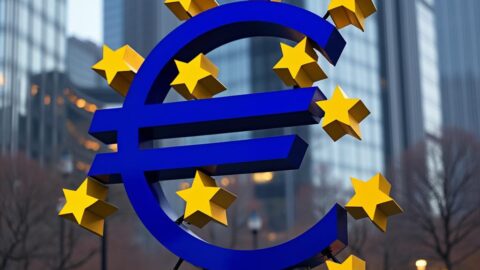
The European Central Bank (ECB) has implemented a series of interest rate cuts in recent months, marking a significant shift in monetary policy aimed at boosting economic growth across the European Union. These latest cuts underscore the ECB's commitment to strengthening economic momentum in a volatile global financial environment. But what do these reductions mean for the average European homeowner or prospective homebuyer, and how might the housing market react in the long term?
The main goal of the interest rate cut is to make loans cheaper, thereby encouraging businesses and consumers to spend and invest more. Lower mortgage rates mean that current and future homeowners benefit from lower monthly payments. This is undoubtedly good news for the housing market, which suffered during the height of the COVID-19 pandemic when economic uncertainty brought many property transactions to a standstill.
For mortgage holders with fixed-rate mortgages, these interest rate cuts naturally offer no immediate benefits, as their rates are fixed for the entire loan term. However, they could benefit in the future when refinancing or moving to a new property. Mortgage holders with variable-rate mortgages, on the other hand, could experience more immediate relief, as their rates are typically linked to the ECB's key interest rate.
Historical precedents show that interest rate cuts have occasionally led to a housing boom. For example, following the 2008 financial crisis, many European countries saw a gradual increase in home purchases as a direct response to lower borrowing costs. Economists point out that a similar scenario could unfold with the current interest rate cuts, particularly as consumer confidence recovers after the pandemic.
Predicting future fixed and variable mortgage rates is difficult due to the uncertainty surrounding the economic recovery. Many experts expect the ECB to keep interest rates low until there are substantial signs of sustained economic growth. Professor Marcus Lund of the University of Luxembourg observes: “The ECB’s approach is cautious but determined. It wants to create an environment in which real estate investments appear not only profitable but also attractive.”
The far-reaching implications of the ECB's measures cannot be discussed without considering the differing economic conditions in Europe. Countries like Germany and France, with traditionally stronger economies, may react differently than countries like Greece or Spain, where economic challenges persist. These differences could influence how banks adjust their mortgage offerings in different markets.
While interest rate cuts offer opportunities, they also carry potential risks. A rapid increase in housing demand could drive up property prices and make housing less affordable in the long run. Analysts warn of a possible housing bubble similar to the one in the early 2000s if caution is not exercised.
The real estate market has historically been a key driver of economic recovery. With the impact of ECB policies, stakeholders are closely monitoring the potential effects on the construction and real estate sectors. Increased demand could stimulate construction activity, create jobs, and contribute to a more robust economic recovery. However, the availability of building materials and labor shortages remain obstacles that need to be monitored.
From a consumer perspective, the psychological impact of interest rate cuts and a market recovery should not be underestimated. With the right financial conditions, buying a home becomes more attractive and, for many, a sign of a return to stability. Financial advisor Elena Bertolucci says: "Consumer psychology plays an undeniable role in the real estate market. Trust is a major factor in the decision to buy, sell, or invest in a property."
In summary, the ECB's interest rate policy in Europe, as it navigates the post-pandemic economic landscape, serves as a guide for future expectations. While there are potential benefits, particularly for the housing market, caution is warranted. All stakeholders, from policymakers to homeowners, must weigh the advantages against the potential pitfalls to foster a balanced recovery. Vigilance and adaptability remain crucial, as always, as the economy continues to evolve.